
collateral ligament tears

Restore Knee Stability and Strength with Collateral Ligament Care
A torn or damaged meniscus can cause sharp knee pain, swelling, locking, and difficulty bending or walking. At Greater Noida Orthopaedic Clinic, Dr. Bharat Goswami provides specialised Meniscus Care Treatment to repair and preserve the natural cushioning of the knee joint.
Using arthroscopic techniques, the treatment focuses on pain relief, joint protection, long-term knee health, and quick return to routine and sports activities.
Collateral Ligament Care by Dr. Bharat Goswami – Knee Stability Care
With vast experience in knee cartilage care, Dr. Goswami treats meniscus injuries caused by twisting movements, sports trauma, accidents, ageing, or rough physical activity. His goal is to preserve maximum natural cartilage, enhance joint movement, and protect the knee from arthritis in the future.
Why patients trust Dr. Goswami:
✔ Accurate knee evaluation with MRI-based diagnosis
✔ Cartilage-preserving treatment approach to protect joint health
✔ Arthroscopic repair for faster healing and minimal scarring
✔ Personalized rehab for safe return to sports and daily routine
If meniscus pain is limiting your movement, timely treatment protects your knee and prevents long-term degeneration.
Let's Meet Up
Collateral Ligament Care by Dr. Bharat Goswami – Knee Stability Care
Collateral ligament tears occur when the medial or lateral stabilizing ligaments of the knee are overstretched, partially torn, or completely ruptured. Modern treatment strategies help reduce pain, restore ligament strength, and improve knee stability.

Medial Collateral Ligament (MCL) Tear
Injury to the inner ligament causing pain, swelling, and instability.
Lateral Collateral Ligament (LCL) Tear
Injury to the outer ligament affecting knee stability.

Sports-Related Ligament Injury
Tears caused by football, basketball, badminton, or other athletic activity.

Post-Traumatic Ligament Injury
Tear due to accidents, falls, or sudden impact on the knee.

Combined Ligament Injuries
MCL or LCL injury with additional knee ligament damage such as ACL or PCL tears.
Collateral Ligament Tear Treatment Techniques Practiced by Dr. Bharat Goswami

Conservative Management
Rest, bracing, physiotherapy, and medication for partial tears.

Arthroscopic Evaluation
Small camera used to assess ligament injury and joint stability.

Minimally Invasive Ligament Repair
Surgical repair of torn ligaments for complete stability.

Post-Treatment Rehabilitation Program
Structured physiotherapy to restore strength, flexibility, and functional knee movement.
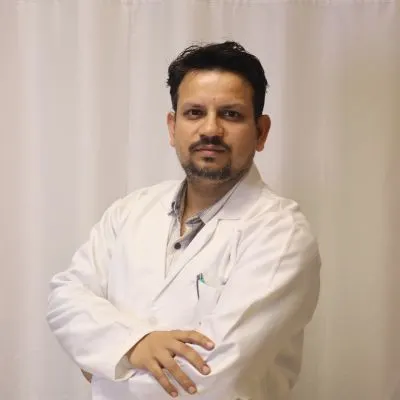
Supportive Care for Complete Knee Stability and Function
Dr. Bharat Goswami customizes treatment plans based on lifestyle — athletes, active adults, office workers, and elderly patients — ensuring safe recovery, reduced pain, and long-term knee health.
Freedom from Pain and Instability
Most patients notice improvement in knee stability and pain relief within weeks, with continued progress through guided rehabilitation.
Long-Term Knee Function
Strengthening and mobility exercises maintain pain-free motion, prevent recurrence, and allow safe return to sports and daily activities.

FAQs About Collateral Ligament Tear Treatment
Can a collateral ligament tear heal without surgery?
Partial tears often heal with bracing, physiotherapy, and rest. Complete tears or instability may require surgical repair.
How long is recovery after ligament repair?
Recovery varies by severity; most patients regain functional movement within 6–8 weeks, with full recovery in 3–4 months.
Will I need physiotherapy after treatment?
Yes, post-treatment rehabilitation is crucial for restoring knee strength, flexibility, and stability.
Can collateral ligament injuries recur?
Recurrence is uncommon with proper treatment and adherence to rehabilitation exercises.

Book Your Collateral Ligament Tear Evaluation Today
Delaying treatment can worsen knee instability, pain, and functional limitations. With expert diagnosis, minimally invasive repair, and guided rehabilitation, Dr. Bharat Goswami helps patients recover safely, comfortably, and confidently.