
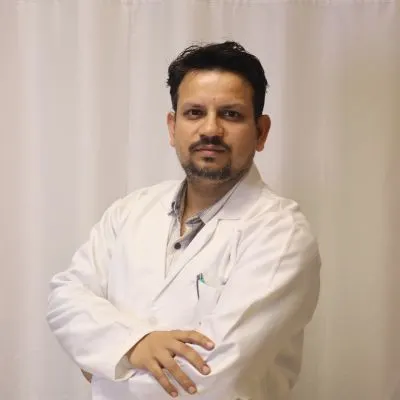
Dr.Bharat Goswami

Shoulder Dislocation Treatment

shoulder dislocation

Restore Shoulder Stability and Confidence with Expert Dislocation Care

A dislocated shoulder can cause intense pain, weakness, swelling, and the constant fear that the shoulder may slip out again during movement. At Greater Noida Orthopaedic Clinic, Dr. Bharat Goswami provides advanced Shoulder Dislocation Treatment to restore joint stability, rebuild muscle control, and prevent repeated dislocations.
Using specialized shoulder stabilization techniques — both non-surgical and arthroscopic — patients achieve long-term comfort and can return to daily routine, exercise, and sports with confidence.

Shoulder Dislocation Care by Dr. Bharat Goswami – Shoulder Specialist

With extensive experience in treating shoulder instability, Dr. Goswami treats both first-time dislocations and chronic shoulder instability. His treatment approach focuses on tightening loose ligaments, repairing labral tears, and strengthening shoulder support muscles to ensure long-term stability.

Why patients trust Dr. Goswami:
✔ Accurate diagnosis using MRI and joint stability assessment
✔ Personalized treatment plan based on age, lifestyle & injury severity
✔ Arthroscopic shoulder stabilization for athletes and young adults
✔ Complete rehabilitation to prevent future dislocations

If the shoulder keeps slipping or feels unstable, proper treatment can restore strength, stability, and full movement.

Let's Meet Up

Conditions Where Shoulder Dislocation Treatment Is Highly Effective

Shoulder dislocation occurs when the upper arm bone slips out of its socket due to trauma, collision, or sudden twisting. With timely treatment and structured rehabilitation, shoulder stability and strength can be fully restored.

shoulder-pain-icon

First-Time Shoulder Dislocation

Shoulder slips out after sudden trauma or injury, causing difficulty in movement.
rotator-cuff-icon

Recurrent Shoulder Dislocation

Repeated dislocations with minor movements or during sleep.

shoulder-dislocation-icon

Bankart Tear / Labral Injury

Cartilage tear leading to chronic instability and shoulder slipping.
shoulder-ligament-icon

Sports-Related Shoulder Instability

Seen in swimming, badminton, cricket, kabaddi, gym workouts, etc.

shoulder-pain-icon

Multidirectional Instability

Loose ligaments causing the shoulder to slip in multiple directions.

rotator-cuff-icon

Post-Injury Weakness

Persistent pain, weakness, and fear of moving the arm after trauma.
Shoulder Dislocation Treatment Techniques by Dr. Bharat Goswami

physiotherapy

Closed Reduction (Non-Surgical)

Safely repositions the shoulder back into the socket with pain control and sedation.

rotator-cuff-icon

Shoulder Bracing & Immobilization

Rest and controlled support to allow healing after first-time dislocation.

bone-density-icon

Image-Guided Injection Therapy

Helps reduce inflammation and pain while healing soft tissues.

rotator-cuff-icon

Arthroscopic Bankart Repair

Keyhole surgery to fix torn labrum and tighten ligaments to prevent future dislocations.

bone-density-icon

Arthroscopic Shoulder Stabilization

Secures loose ligaments and reinforces socket stability for athletes.

physiotherapy

Rehabilitation & Strength Training

Strengthens shoulder and rotator cuff muscles for long-term stability.
Supportive Care for Long-Term Shoulder Strength and Confidence

Dr. Bharat Goswami provides rehabilitation plans based on each patient’s activity level — including sportspersons, working professionals, and elderly individuals.

Return to Routine and Sports
With guided physiotherapy, most patients regain pain-free movement within weeks and return to sports gradually based on muscle strength and stability.

Protection from Recurrent Dislocations
Targeted strengthening programs help stabilize the joint capsule and prevent future dislocations.

Dr Bharat Goswami

FAQs About Shoulder Dislocation Treatment

How soon should I seek treatment after a shoulder dislocation?

 Immediately. Quick treatment reduces pain, swelling, tissue damage, and chances of repeat dislocation.

 No. First-time dislocations in many patients can be treated without surgery. Surgery is recommended for athletes and individuals with repeated instability.

Most patients resume sports within 4–6 months after arthroscopic stabilization based on rehabilitation progress.

 With proper treatment and strengthening, recurrence risk reduces significantly.

FAQs

Book Your Shoulder Stability Evaluation Today

Ignoring a shoulder dislocation increases the risk of repeated injuries and long-term joint damage. Dr. Bharat Goswami provides accurate diagnosis, shoulder-specific treatment, and advanced stabilization procedures to ensure pain-free, confident movement.