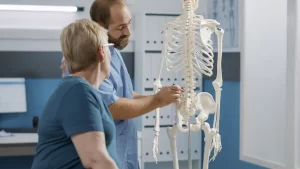

Severe knee pain can affect walking, climbing stairs, sleep, and even daily activities. When medicines, physiotherapy, and lifestyle changes no longer provide relief, doctors may recommend knee replacement surgery to improve movement and reduce long-term pain.
Today, there are different types of knee replacement surgery available depending on the condition of the knee joint, age, activity level, and severity of damage. Many patients feel confused about which option is right for them and what recovery may look like afterwards.
This complete guide explains the most common knee replacement surgery options, how they work, recovery expectations, latest advancements, and important factors to consider before surgery.
Table of Contents
What Is Knee Replacement Surgery?
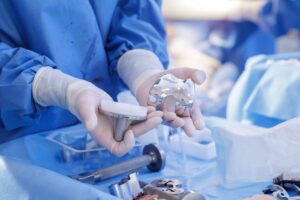
Knee replacement surgery — also called knee arthroplasty — is a procedure where a surgeon removes the damaged part, arthritic surfaces of your knee joint and replaces them with artificial implants made of metal and medical-grade plastic. These implants recreate smooth, pain-free knee movement — restoring the function that arthritis has progressively taken away.
The surgery is not about replacing the entire knee. It is about replacing the worn-out joint surfaces — much like replacing a damaged tyre rather than the entire car. The surrounding bones, ligaments, and muscles remain your own.
When Is Knee Replacement Surgery Required?
Knee replacement is typically recommended when:
- Severe knee pain limits everyday activities — walking, climbing stairs, standing
- Pain continues even at rest or disrupts sleep
- Knee stiffness prevents normal bending or straightening
- Anti-inflammatory medications and injections no longer provide adequate relief
- X-rays show significant cartilage loss or bone-on-bone contact
- Physiotherapy and lifestyle changes have not improved function
Most patients reach this point after years of managing knee osteoarthritis, the most common reason for knee replacement in India.
Types of Knee Replacement Surgery — A Complete Guide
There are several types of knee replacement surgery. Understanding the differences helps you ask better questions and make a more informed choice.
1. Total Knee Replacement (TKR)
Total knee replacement is the most commonly performed knee replacement procedure worldwide. All three compartments of the knee — the medial (inner), lateral (outer), and patellofemoral (kneecap) — are resurfaced with implants.
Best suited for:
- Patients with arthritis affecting the entire knee joint
- Severe bone-on-bone wear across multiple compartments
- Patients over 60 who want lasting, comprehensive relief
What to expect:
- Hospital stay of 2-4 days
- Walking begins within 24 hours
- Full recovery in 6-12 months
- Implant lifespan: 15-25 years
2. Partial (Unicompartmental) Knee Replacement (PKR)
Partial knee replacement replaces only the damaged compartment of the knee — usually the medial (inner) side — while preserving healthy bone, cartilage, and ligaments in the other compartments.
Best suited for:
- Patients with arthritis confined to one knee compartment
- Younger, active patients who want to preserve more natural tissue
- Patients with intact cruciate ligaments
Advantages over total knee replacement:
- Smaller incision and less tissue disruption
- Faster recovery — many patients walk independently within 2-3 weeks
- More natural knee feel post-surgery
- Less blood loss and lower complication rate
Consideration: If arthritis progresses to other compartments later, conversion to total knee replacement may be needed.
3. Bilateral Knee Replacement
Bilateral knee replacement addresses both knees — either simultaneously in one surgical session, or in two separate staged procedures weeks apart.
Simultaneous bilateral:
- One anaesthetic, one hospital stay, one recovery period
- Best for fit, healthy patients under 70
Staged bilateral:
- Safer for older patients or those with heart or lung conditions
- Two recovery periods, but lower immediate surgical risk
Best suited for:
- Patients with severe arthritis in both knees are equally
- Those who want the fastest return to full bilateral function
4. Robotic-Assisted Knee Replacement
Robotic-assisted knee replacement is the most technologically advanced type of knee replacement surgery currently available. A surgeon uses a computer-guided robotic arm to perform the procedure with sub-millimetre precision — based on a 3D CT model of the patient’s specific knee anatomy.
How it differs from traditional knee replacement:
- Pre-operative CT scan creates a personalised 3D surgical plan
- Robotic arm provides real-time feedback during surgery
- Haptic boundaries prevent cuts beyond the planned zone
- Soft tissue balance is measured quantitatively during the procedure
Advantages:
- More precise implant alignment — reducing alignment errors by 3-4 times
- Less soft tissue damage — faster recovery
- Higher patient satisfaction scores
- Lower revision rates — under 3% at 10 years
Best suited for:
- Younger, active patients who want maximum precision and implant longevity
- Patients with complex anatomy or previous knee surgery
5. Minimally Invasive Knee Replacement
Minimally invasive knee replacement (MIS) uses a smaller incision — typically 8-10cm versus the standard 15-20cm — with specialised instruments designed to work through a smaller opening.
Advantages:
- Reduced blood loss and lower infection risk
- Shorter hospital stay for appropriate patients
- Faster early recovery
Consideration: MIS is only appropriate for certain patients and surgeons. In less experienced hands, the smaller exposure can compromise implant positioning accuracy. It is not suitable for severely deformed knees or revision surgery.
6. Kneecap Replacement (Patellofemoral Arthroplasty)
Patellofemoral arthroplasty replaces only the kneecap joint — the articulation between the patella (kneecap) and the groove at the front of the femur. It is a relatively rare procedure, suitable for a very specific patient profile.
Best suited for:
- Isolated patellofemoral arthritis — pain primarily at the front of the knee
- Patients whose medial and lateral compartments are healthy
- Younger patients with patellofemoral syndrome experience severe pain
Advantage: Preserves all three compartments if they are healthy; conversion to total knee replacement is straightforward if needed later.
7. Revision Knee Replacement
Revision knee replacement involves removing a previously placed implant and replacing it with a new one. It is more complex than a primary knee replacement and requires specialised surgical expertise.
Reasons for revision surgery may be needed:
- Implant loosening or wear after 15-20+ years
- Infection around the implant
- Implant fracture or mechanical failure
- Constant instability or pain from a misaligned original implant
Revision surgery typically requires longer hospital stays and more complex rehabilitation than primary replacement.
Techniques Used in Knee Replacement Surgery
Beyond the type of replacement, surgeons use different technical approaches:
Computer-Aided Surgery (CAS): Uses intraoperative computer navigation to guide bone cuts — improving alignment without a robotic arm. Less expensive than robotics but more precise than the traditional manual technique.
Patient-Matched Implants: CT or MRI data is used to manufacture implants custom-designed for the specific patient’s knee anatomy. Offers a better fit but a higher cost.
Cement vs Cementless Fixation: Cemented implants use bone cement for immediate fixation — standard for older patients. Cementless implants rely on bone growing into the implant surface — used more commonly in younger, healthier bone.
How Is a Knee Replacement Performed? — Step by Step
- Anaesthesia — Spinal or general anaesthesia is administered
- Incision — Surgeon accesses the knee joint through a controlled incision
- Bone preparation — Damaged cartilage and thin bone layer removed from the femur and tibia
- Trial implants — Test components placed to assess size, alignment, and movement
- Final implant placement — Permanent components cemented or press-fitted into position
- Closure — Wound closed, drain placed temporarily, dressing applied
- Recovery room — Patient monitored and physiotherapy begins within 24 hours
Which Type of Knee Replacement Surgery Is Best for You?
The best type of knee replacement surgery depends on your age, activity level, overall health, and the severity of knee damage. Some patients may benefit from partial knee replacement, while others with advanced arthritis may require total knee replacement for better long-term relief.
Advanced options like robotic knee replacement may help improve surgical precision and recovery. An orthopedic surgeon recommends the most suitable option after evaluating your knee condition and mobility
What to Expect After Knee Replacement Surgery
Recovery follows a predictable, structured timeline:
- Day 1: Walking with support begins. Physiotherapy starts.
- Weeks 2-6: Home exercises, walking aids, swelling management.
- Weeks 6-12: Independent walking, driving clearance, active rehabilitation.
- Months 3-6: Near-normal daily activity resumed.
- Months 6-12: Full strength and range of motion achieved.
Activities encouraged long-term: Walking, swimming, cycling, golf, and light hiking.
Activities to avoid permanently: Running, jumping, contact sports — to protect implant longevity.
Latest Developments in Knee Replacement Surgery
The field is advancing rapidly — 2026 brings several significant developments:
Robotic platforms becoming standard: MAKO, Rosa Knee, and Navio systems are increasingly available at specialist centres in India’s major cities.
Sensor-guided soft tissue balancing: Intraoperative sensors measure compartment pressure in real time during surgery — producing more accurately balanced implants.
Cementless fixation expanding: Improved coating technology allows more young patients to benefit from cementless fixation, which may produce better long-term bone integration.
Outpatient knee replacement: Select patients are now undergoing total knee replacement as a day procedure — walking out the same day. Still limited to highly selected patients at specialist centres.
Success Factors in Types of Knee Replacement
Regardless of which type of knee replacement is performed, these factors consistently determine the outcome quality and success of knee replacement surgery:
- Surgeon experience and volume — the strongest single predictor of outcome
- Accurate implant alignment — directly determines long-term implant survival
- Consistent post-operative physiotherapy — determines functional recovery speed and quality
- Patient’s pre-operative strength — stronger patients recover faster
- Implant quality — premium branded implants have better long-term outcome data
Frequently Asked Questions
1. What’s the best type of knee replacement surgery?
The best option depends on the patient’s knee condition, age, and severity of arthritis. Total and robotic-assisted knee replacement are commonly recommended for advanced joint damage.
2. What is the newest knee replacement technique?
Robotic knee replacement is one of the latest techniques that helps improve surgical precision and implant positioning.
3. What is the hardest knee surgery to recover from?
Revision knee replacement is usually the most complex and may require a longer recovery compared to primary knee replacement surgery.
4. How many types of knee replacement are there?
Common types include total, partial, bilateral, robotic-assisted, minimally invasive, and revision knee replacement surgery.
5. How many hours is a full knee replacement surgery?
A full knee replacement surgery usually takes around 1–3 hours, depending on the patient’s condition and procedure type.
Conclusion
Choosing the right type of knee replacement surgery is one of the most important healthcare decisions of your life — and it deserves expert, personalised guidance rather than a one-size-fits-all approach. Whether total, partial, robotic, or minimally invasive, each option has specific indications and advantages that depend entirely on your unique anatomy, lifestyle, and goals.
Dr. Bharat Goswami — Best Orthopedic Surgeon in Greater Noida — at Fortis Hospital, Greater Noida, specialises in advanced knee replacement surgery, including robotic-assisted total and partial knee replacement. His patient-first approach ensures every patient receives an honest, personalised recommendation — and comprehensive care from first consultation through complete recovery.