
If you’ve recently undergone knee replacement surgery, recovery is just as crucial as the procedure itself. Many patients unknowingly make mistakes that slow healing, increase pain, or affect long-term results.
Understanding the top 5 mistakes after knee replacement can help you recover faster, avoid complications, and regain mobility safely. In this complete guide, you’ll learn what not to do after knee replacement, along with expert-backed recovery tips.
Table of Contents
What Is Knee Replacement Surgery?
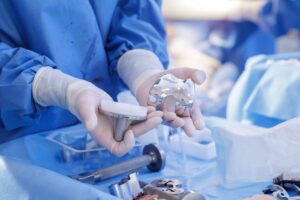
Knee replacement surgery — also called knee arthroplasty — is a procedure where a damaged portion of the arthritic knee joint is replaced with an artificial implant made of metal and plastic. It is one of the most commonly performed orthopaedic procedures in India and globally, with consistently high success rates when patients follow the right post-operative protocol.
The surgery itself is only half the story. Recovery — the weeks and months of physiotherapy, lifestyle adjustments, and careful home management after the procedure — determines the final outcome. Patients who avoid the most common post-operative mistakes consistently achieve better pain relief, better range of motion, and longer implant survival than those who do not.
Types of Knee Replacement
Understanding your specific procedure helps you follow the right recovery guidelines:
Total Knee Replacement (TKR): The entire knee joint surface is replaced — both the femoral (thigh) and tibial (shin) components, and usually the back of the kneecap. This is the most common type.
Partial Knee Replacement (PKR): Only the damaged part of the knee is replaced — typically the inner (medial) compartment. Recovery is generally faster than total knee replacement.
Robotic-Assisted Knee Replacement: Either total or partial replacement performed with computer-guided robotic precision — producing more precise implant alignment and typically a smoother recovery.
Regardless of which type you have had, the same core recovery mistakes apply — and avoiding them makes the difference between a smooth recovery and a complicated one.
Top 5 Mistakes After Knee Replacement — And How to Avoid Each One
Mistake 1 — Skipping or Stopping Physiotherapy Too Early
Physiotherapy feels uncomfortable after knee replacement — the exercises hurt, the knee is swollen, and rest feels more logical than movement. But stopping early is one of the worst decisions a patient can make, because consistent movement is what prevents scar tissue from forming inside the joint.
Once this scar tissue tightens, regaining range of motion becomes significantly harder and sometimes requires a second procedure to break it down.
What not to do: Stop physiotherapy because it is uncomfortable, or assume that walking alone is enough rehabilitation.
What to do instead:
- Begin physiotherapy within 24 hours of surgery and attend every session for the first 12 weeks
- Continue home exercises twice daily, even on formal physiotherapy days
The target is 90 degrees of knee bend within 3 weeks and 120 degrees within 6-8 weeks — milestones that require consistent effort, not rest.
Mistake 2 — Doing Too Much Too Soon
Patients encouraged by early progress sometimes push harder than the healing knee can safely handle. The first 6 weeks are a critical window — bone is integrating with the implant, and soft tissues are still repairing.
Excessive activity during this period increases swelling, causes unnecessary pain, and risks stressing the implant before full fixation is achieved.
Common examples:
- Walking long distances or climbing stairs excessively in the first 2-3 weeks
- Returning to physically demanding work after 6-8 weeks
What to do instead:
- Follow your surgeon’s weight-bearing instructions precisely at every stage
- Plan activity in short bursts — walk, rest, elevate, repeat
Use walking aids for as long as your surgeon recommends — not just until the pain reduces.
Mistake 3 — Ignoring Swelling and Not Elevating the Leg
Unmanaged swelling significantly slows recovery, increases pain, and limits the range of motion achievable in physiotherapy. Swelling typically peaks at days 3-7 and gradually reduces over 3-6 months — but only with consistent management.
What not to do:
- Sit with the leg hanging down for extended periods
- Skip icing sessions because the knee feels slightly better
Top home care tips for swelling:
- Elevate the leg above heart level for 20-30 minutes, 3-4 times daily
- Ice the knee (cloth-wrapped — never direct skin contact) for 15 minutes after every exercise session
Wearing the compression stockings your hospital provided consistently — and reducing activity if swelling suddenly increases — are the two most practical daily habits for swelling control.
Mistake 4 — Neglecting Blood Clot Prevention
Deep vein thrombosis (DVT) — a blood clot in the leg veins — is one of the most serious complications after knee replacement. Many patients become complacent about their blood thinners and movement protocols after leaving the hospital.
Warning signs needing immediate medical attention:
- Sudden deep cramping pain in the calf or thigh
- Shortness of breath or chest pain — possible pulmonary embolism
What to do:
- Take prescribed blood-thinning medication exactly as directed — never skip
- Do ankle pumping exercises every hour when awake and walk short distances regularly
Never stop prescribed blood thinners without your surgeon’s explicit instruction — even if you feel completely well.
Mistake 5 — Using the Wrong Furniture and Home Setup
The home environment directly impacts how safely and smoothly the knee heals. Chairs that are too low, toilets without raised seats, and floor-level hazards all create unnecessary strain and fall risk on a healing knee.
What not to do: Any movement requiring deep knee bending — getting up from low sofas, squatting to low shelves, or sitting cross-legged on the floor.
Home setup essentials:
- Raise chair height so hips sit higher than knees — use firm cushions if needed
- Install a raised toilet seat and remove floor rugs and trailing cables
Arranging frequently used items at waist height and preparing the bedroom for easy leg elevation before you return home make the first two weeks significantly safer and more comfortable.
Knee Replacement Exercises to Avoid
Not all exercises are appropriate after knee replacement — and doing the wrong ones at the wrong time can set recovery back significantly. During the first 6-12 weeks, certain movements place excessive stress on the new implant before it has fully integrated.
These Exercises and movements to avoid after knee replacement:
- Deep squats, full lunges, and any exercise requiring the knee to bend beyond what your physiotherapist has cleared
- High-impact activities — running, jumping, step aerobics — are permanently after total knee replacement
- Kneeling directly on the operated knee in the first 3-6 months
Always confirm with your physiotherapist before starting any new exercise — even gentle ones. The right exercises at the right stage of recovery are what build strength; the wrong ones at the wrong time cause major setbacks.
What to Do After a Knee Replacement — The Right Recovery Approach
Avoiding these five mistakes is the foundation of good recovery. Building on that foundation with the right positive habits produces the best long-term outcomes:
- Keep all follow-up appointments — your surgeon monitors healing progress and clears each new activity stage based on examination and imaging
- Maintain a healthy weight — every kilogram of body weight adds approximately 3-4kg of stress to the knee joint with walking
- Eat a protein-rich, anti-inflammatory diet — protein supports tissue healing and muscle rebuilding
- Stay mentally engaged in recovery — patients who actively participate in their rehabilitation consistently achieve better outcomes than passive ones
Top Tips for a Quick Recovery After Knee Replacement
Recovery speed is largely within your control — patients who follow structured guidance consistently heal faster and achieve better long-term outcomes.
Top recovery tips that make the biggest practical difference:
- Ice and elevate consistently — even on good days when the knee feels better than expected
- Keep all follow-up appointments — your surgeon tracks healing milestones and clears each new activity stage
- Eat a protein-rich diet — protein directly supports tissue repair and muscle rebuilding after surgery
Recovery is not just physical — patients who stay mentally engaged in their rehabilitation goals and track their progress consistently achieve better outcomes. A pain-free, active life after knee replacement is the goal, and each week of consistent effort builds directly toward it.
Frequently Asked Questions
1. What is the best way to sit after knee replacement surgery?
Sit in a firm chair with hips slightly higher than knees — avoid low sofas and keep the leg elevated when resting.
2. What can you never do after a knee replacement?
Avoid some high-impact activities like running and jumping permanently — and in early recovery, avoid deep squatting, kneeling on the operated knee, or any movement causing sharp pain.
3. Can too much walking damage a knee replacement?
Yes — excessive walking before the implant has fully integrated can increase swelling and stress the fixation. Always follow your surgeon’s walking guidelines, not just your pain level.
4. What are the signs of a failed knee replacement?
Constant severe pain, increasing instability, swelling that does not reduce, stiffness limiting daily activities, or clicking sensations — all require urgent orthopaedic review.
5. What are the worst days after knee replacement?
Days 3-5 are typically the most painful as surgical swelling peaks. Consistent icing, elevation, and prescribed pain medication through this window produce the fastest improvement.
Conclusion
Knee replacement surgery success rate is around 90-95% — but that success is not guaranteed by the surgery alone. It is built in the weeks and months of careful, consistent recovery that follow. Avoiding these top 5 mistakes after knee replacement gives every patient the best possible chance of achieving full pain relief, complete mobility, and long-lasting results.
Dr. Bharat Goswami — Best Orthopedic Surgeon in Greater Noida, specialises in advanced knee replacement surgery, including robotic-assisted total and partial knee replacement. His team provides comprehensive post-operative recovery guidance for every patient from surgery through to full functional recovery.