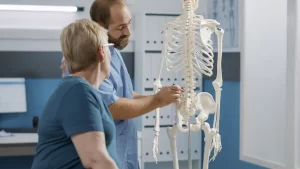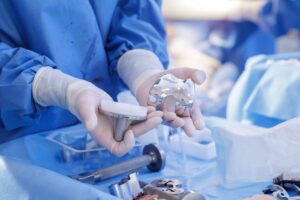

Knee pain caused by arthritis or cartilage damage can make walking, climbing stairs, and performing even daily activities difficult. When damage affects only one part of the knee joint, a full knee replacement may not always be needed. In such cases, Unicondylar Knee Replacement can be an effective and less invasive option.
Also called partial knee replacement, this procedure replaces only the damaged or affected part of the knee while preserving healthy bone and ligaments. Compared to total knee replacement, it often offers faster recovery, less pain, and more natural knee movement.
In this complete guide, we’ll explain the types, benefits, risks, recovery, success rate, cost, and differences between total knee replacement and Unicondylar Knee Replacement.
Table of Contents
What Is Unicondylar Knee Replacement?
Unicondylar knee replacement (UKR) is a procedure that replaces only the damaged or affected part of the knee joint while preserving the healthy bone, cartilage, and ligaments.
The knee has three compartments — medial, lateral, and patellofemoral. In UKR, only the affected compartment is replaced with a metal and plastic implant, while the healthy parts of the knee remain untouched.
Unlike TKR, UKR preserves more of the natural knee structure, often resulting in faster recovery, smaller incisions, and more natural knee movement.
Types of Unicondylar Knee Replacement
Types of Unicondylar knee replacement are classified based on which compartment of the knee is being replaced:
Medial Unicondylar Knee Replacement
The most common type — replacing the medial (inner) compartment of the knee. This is appropriate when arthritis has damaged the inner side of the knee joint, which is more commonly affected than the other compartments.
Lateral Unicondylar Knee Replacement
Replacing the lateral (outer) part of the knee. This is a less common procedure because lateral compartment arthritis occurs less frequently, and the surgical technique is more technically demanding.
Patellofemoral Replacement
Replacing the patellofemoral joint — the compartment between the kneecap and the front of the femur. Appropriate when arthritis is isolated to the front of the knee, producing pain specifically when climbing stairs, squatting, or sitting for extended periods.
Symptoms & Causes That Lead to Unicondylar Knee Replacement
Unicondylar knee replacement is typically recommended for patients with arthritis that has progressively destroyed one part of the knee.
Common causes:
- Osteoarthritis — the most common cause, producing gradual cartilage loss in one compartment
- Post-traumatic arthritis — arthritis developing in a specific knee compartment following a previous knee injury
- Avascular necrosis — bone tissue death due to disrupted blood supply, typically affecting one knee compartment
Symptoms that indicate unicondylar knee disease:
- Pain specifically on one side of the knee — inner side (medial) or outer side (lateral)
- Pain that is worse with walking, stair climbing, or rising from a seated position
- Stiffness and reduced range of motion in the knee
- Swelling around one side of the knee joint
- A knee that bows inward (varus deformity) or outward, suggesting specific compartment involvement
Diagnosis of Unicondylar Knee Replacement
Before recommending unicondylar knee replacement, an orthopaedic surgeon performs a thorough assessment to confirm that the disease is genuinely limited to one compartment or not:
- Clinical examination — assessing pain location, range of motion, ligament stability, and gait pattern
- Weight-bearing X-rays — the most essential diagnostic tool, showing joint space narrowing limited to one compartment
- MRI scan — assessing cartilage condition, ligament integrity, and confirming compartment-specific disease
- CT scan — in selected cases, for detailed bone anatomy assessment before surgical planning
The integrity of the cruciate ligaments — particularly the anterior cruciate ligament (ACL) — is a critical diagnostic consideration. Intact ACLs are generally required for unicondylar knee replacement to function correctly long-term.
Best Candidates for a Unicondylar Knee Replacement
Unicondylar knee replacement produces the best outcomes in patients who meet specific clinical criteria:
Ideal candidates:
- Arthritis confirmed on imaging to be limited to one knee compartment
- Intact anterior cruciate ligament (ACL) and other knee ligaments
- Knee deformity that is mild and correctable — not severe fixed deformity
- Age typically 55 and above — though younger patients with isolated compartment disease may also qualify
- Lower activity demands — walking, swimming, cycling — rather than high-impact sporting activities
- BMI within an acceptable range — high BMI significantly increases implant stress
Who Is Not Suitable for Unicondylar Knee Replacement?
Not every patient with knee arthritis is appropriate for unicondylar replacement. Patients who should consider total knee replacement instead include:
- Arthritis involving two or three knee compartments — not just one
- Significant ACL deficiency or ligament instability
- Severe fixed varus or valgus deformity that cannot be corrected at surgery
- Inflammatory arthritis — such as rheumatoid arthritis — which typically affects the whole joint
- Very high BMI, where implant stress and revision risk are significantly elevated
- Patients with chondrocalcinosis (calcium deposits in the joint)
What Happens During Unicondylar Knee Replacement Surgery?
Understanding the surgical process helps patients set realistic expectations and feel more confident before their procedure.
Step 1 — Anaesthesia: Spinal or general anaesthesia is administered. Spinal anaesthesia is commonly preferred for unicondylar procedures.
Step 2 — Incision: A smaller incision than total knee replacement — typically 8-10cm — is made over the affected compartment. The kneecap does not need to be dislocated, as it does in total knee replacement.
Step 3 — Bone preparation: The affected cartilage and a thin layer of bone from the damaged compartment are removed using precision instruments.
Step 4 — Implant placement: A metal component is fitted onto the femoral (thigh bone) side and a tibial (shin bone) component is placed below — with a plastic spacer between them to recreate smooth joint movement.
Step 5 — Closure: The incision is closed, the knee is dressed, and the patient is moved to recovery. Walking typically begins within hours of the procedure.
The full surgery takes approximately 60-90 minutes.
Advantages of Unicondylar Knee Replacement
For the right candidate, unicondylar knee replacement offers compelling benefits over total knee replacement:
- Smaller incision — 8-10cm versus 15-20cm for total knee replacement — less tissue trauma
- Faster recovery — most patients walk independently within 2-3 weeks and return to daily activities faster
- More natural knee feel — retaining the healthy compartments and cruciate ligaments produces knee movement that feels closer to a natural knee
- Less blood loss — the more limited surgical exposure reduces intraoperative blood loss
Difference Between TKR and Unicondylar Knee Replacement
| Feature | Unicondylar KR | Total Knee Replacement |
| Joint replaced | One compartment only | All three compartments |
| Incision size | 8-10cm (smaller) | 15-20cm (larger) |
| Bone preserved | Yes — 2 compartments intact | No — all surfaces replaced |
| Ligaments retained | Yes — cruciate ligaments preserved | ACL typically removed |
| Knee feel | More natural | Good, but different from natural |
| Recovery speed | Faster — 2-4 weeks to independence | Slower — 6-8 weeks |
| Hospital stay | Often 0-1 nights | 2-4 nights |
| Best for | Single-compartment arthritis | Multi-compartment arthritis |
| Revision options | Can convert to TKR if needed | Revision is more complex |
Unicondylar Knee Replacement Success Rate
Unicondylar knee replacement has a strong and well-documented success rate:
- 10-year implant survival: 90-95% in appropriately selected patients
- 15-year implant survival: 85-90% with proper care and activity modification
- Patient satisfaction: 85-92% at 12 months post-surgery
- Revision rate: 5-8% at 10 years — with most revisions being straightforward conversion to total knee replacement
Outcomes are significantly better when unicondylar replacement is performed by a high-volume joint replacement surgeon who is experienced specifically in partial knee replacement — not just total knee replacement.
Recovery After Unicondylar Knee Replacement
Recovery from unicondylar knee replacement is faster and typically more comfortable than total knee replacement recovery — because less tissue is disrupted and the healthy compartments of the knee remain intact.
| Phase | Timeframe | Key Milestones |
| Hospital stay | 0-2 days | Walking begins the same day or on day 1 |
| Early home recovery | Weeks 1-4 | Walking independently, physiotherapy exercises |
| Active recovery | Weeks 4-8 | Return to driving, most daily activities |
| Functional recovery | 2-3 months | Near-normal activity for most patients |
| Full recovery | 3-6 months | Complete strength and range of motion |
Key recovery tips:
- Begin physiotherapy exercises within 24 hours — never delay mobilisation
- Ice the knee for 15 minutes after exercise sessions to reduce swelling
- Follow your surgeon’s weight-bearing and activity guidelines at every stage
- Attend all follow-up appointments — imaging confirms healing and implant position
Risk Factors of Unicondylar Knee Replacement
Like all surgical procedures, unicondylar knee replacement carries risks that patients should understand:
Procedure-specific risks:
- Progression of arthritis — if arthritis advances to other compartments, revision to total knee replacement may eventually be needed
- Implant bearing wear — the plastic insert gradually wears over the years, typically after 15-20+ years
- Implant loosening — more likely with high BMI or very high activity levels
General surgical risks:
- Wound infection — occurs in approximately 1% of cases
- Deep Vein Thrombosis (DVT) — prevented with blood thinners and early mobilisation
- Nerve or blood vessel injury — rare with experienced surgeons
- Stiffness — prevented by consistent early physiotherapy
Cost of Unicondylar Knee Replacement in India
Unicondylar knee replacement cost is generally less compared to total knee replacement — reflecting the smaller implant, shorter hospital stay, and shorter operating time.
| Procedure | Estimated Cost (India) |
| Unicondylar KR (Indian implant) | ₹1,20,000 – ₹2,50,000 |
| Unicondylar KR (Imported implant) | ₹2,00,000 – ₹3,50,000 |
| Robotic Unicondylar KR | ₹2,50,000 – ₹4,50,000 |
Cost factors include hospital category, implant brand, surgeon experience, city, and whether robotic assistance is used. Most health insurance policies in India cover unicondylar knee replacement — verify implant sub-limits and request pre-authorisation before scheduling.
Frequently Asked Questions
1. What is the difference between TKR and unicondylar knee replacement?
Total knee replacement replaces all three compartments of the knee, while unicondylar replacement treats only the affected part and preserves healthy bone and ligaments.
2. What can you never do again after knee replacement surgery?
High-impact activities like running, jumping, and contact sports are usually avoided after surgery, while low-impact activities are generally encouraged.
3. Which type of knee replacement is best?
The best option depends on the severity of arthritis. Unicondylar replacement is suitable for limited damage, while TKR is preferred for advanced arthritis.
4. What is the newest knee replacement option?
Robotic-assisted knee replacement is one of the latest advancements, offering improved implant positioning and better surgical precision.
5. How much walking is too much after knee replacement?
Walking should increase gradually during recovery, as excessive walking too early may increase swelling, pain, and stress on the new joint.
Conclusion
Unicondylar knee replacement is an advanced and less invasive option for patients with arthritis limited to one part of the knee. It offers faster recovery, more natural knee movement, and excellent long-term results when performed on the right candidate.
Dr. Bharat Goswami — Best Orthopedic Surgeon in Greater Noida — specialises in advanced knee replacement procedures, including robotic-assisted unicondylar and total knee replacement, with a patient-focused approach to long-term joint health and recovery.